
If you regularly feel worse while you are at home and noticeably better after you leave, it is reasonable to wonder whether something in the indoor environment is contributing. Headaches, congestion, coughing, eye or throat irritation, fatigue and other symptoms can have many causes, and the pattern alone does not prove that mold or another building condition is responsible. Persistent or severe symptoms should be discussed with a medical professional.
At the same time, a consistent home-only pattern can be a reason to take a closer look at the building itself, especially if there has been a leak, flooding, a musty odor, visible staining or another sign of moisture.
Why the Pattern Is Worth Investigating
The important clue is not one isolated headache or one bad day. It is a repeatable pattern: you spend time in the home, symptoms become noticeable or worse, then they improve after you leave. If that keeps happening, the environment may be one piece of the puzzle.
That does not automatically mean mold. Indoor conditions can involve moisture, dust, allergens, HVAC issues or other sources that require different types of evaluation. The goal is to investigate the property without jumping to a diagnosis.
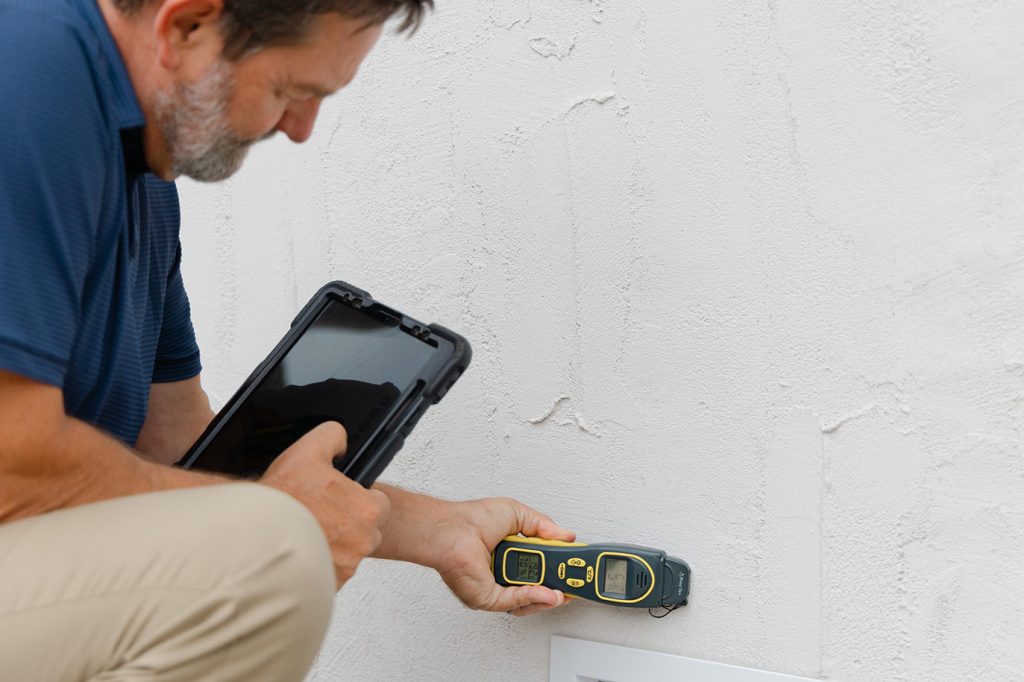
Building Conditions That May Be Worth Checking
Water can travel farther than it appears on the surface. A roof leak, plumbing leak, overflowing appliance, slow AC condensate leak or past flood can leave moisture inside drywall, insulation, cabinets or flooring. Even after the visible water is gone, damp building materials can remain a problem if they were not dried correctly.
Mold needs moisture to grow. It may be visible, but it can also develop behind walls, beneath flooring, inside cabinets or around areas that have stayed damp. A musty odor, recurring discoloration or a history of water intrusion are reasons to investigate further.
Symptoms alone cannot tell you whether mold is present. Inspection and, when appropriate, professional testing are better ways to determine whether a mold issue exists in the building.
- HVAC and Condensation Problems
Air-conditioning systems move large amounts of air through a home and also remove moisture from that air. Problems such as clogged condensate drains, wet insulation around HVAC equipment, dirty components or moisture near an air handler can create conditions that deserve attention. In Arizona, this can become especially noticeable during humid summer and monsoon periods.
- Dust, Allergens and Other Indoor Sources
Not every indoor comfort or health concern is a restoration problem. Dust, pets, cleaning products, ventilation, combustion sources and other conditions may also affect how someone feels inside a home. If the property does not show signs of water damage or mold, another indoor-air or medical specialist may be the better next step.
Clues That the Home Deserves a Closer Look
- You feel noticeably better after leaving the home and the pattern keeps repeating.
- There is a musty, damp or unusual odor that returns even after cleaning.
- The home has had a recent or previous leak, flood, roof problem or plumbing issue.
- You see staining, bubbling paint, warped materials or unexplained discoloration.
- A room, closet, cabinet or area near the HVAC system seems damp or smells different.
- Symptoms seem stronger in one part of the house than another.
What Should You Do First?
Start by separating the health question from the building question. A doctor or other qualified healthcare professional should evaluate medical symptoms. A restoration or environmental professional can evaluate the property for moisture, water damage and conditions that may support mold growth.
If there is an active leak, stop the source if it can be done safely. If the source involves plumbing or HVAC equipment, the appropriate trade may need to make the repair first. Then the affected building materials should be checked to determine how far the moisture traveled and whether drying, removal or testing is appropriate.
When Does Mold Testing Make Sense?
Testing can be useful when there is a specific question that inspection alone cannot answer. That may include a suspected hidden issue, a disagreement about whether mold is present, a need to document conditions before work begins, or concern after a water loss.
Testing should answer a question. It should not be used as a substitute for fixing an obvious leak or drying visibly wet materials.
How ATH Restoration Can Help
ATH Restoration can inspect for water intrusion and hidden moisture, evaluate affected building materials and help determine whether mold testing is appropriate. If a problem is found, ATH can also handle the restoration work needed to dry, remove and repair damaged materials.
ATH also provides testing for mold, asbestos and lead when those concerns are relevant to the property or the work being planned.
Frequently Asked Questions:
No. That pattern can be a reason to investigate the home, but it does not identify the cause. Mold is one possibility among several, and symptoms should not be used to diagnose a building condition.
Yes. Mold can develop in concealed areas when moisture is present. That is why the history of leaks, moisture readings, odors and building conditions can matter as much as what is visible on the surface.
The absence of a musty odor does not rule out moisture or mold. If there has been water intrusion or another reason for concern, an inspection can help determine whether further testing is warranted.
Yes. Condensate drain problems, overflowing pans and other HVAC-related moisture issues can wet surrounding building materials. The HVAC source should be repaired, and the affected materials may also need to be inspected and dried.
For medical symptoms, contact a healthcare professional. For signs of water damage, hidden moisture, mold or a building-related concern, a restoration or environmental professional can evaluate the property. In many cases, both questions should be addressed separately.
If you keep noticing the same pattern at home and there is a reason to suspect moisture, water damage or mold, ATH Restoration can help investigate the property and determine the next step. The goal is to find out what is actually happening in the building before making assumptions about the cause.