
When an air conditioner is running in Arizona, it is doing more than cooling the air. It is also removing moisture. That moisture collects as condensation and is supposed to drain safely away through the AC condensate line.
If that line clogs, cracks, disconnects or backs up, water can spill into ceilings, walls, insulation, cabinets or flooring. During humid summer and monsoon conditions, an AC system can produce enough condensation for a small drainage problem to become real water damage surprisingly quickly.
What Does an AC Condensate Line Do?
As warm air passes over the cold evaporator coil, moisture in the air condenses into water. That water falls into a drain pan and exits the home through a condensate drain line. Under normal conditions, most homeowners never notice the process.
Problems begin when the water cannot drain the way it should. Depending on where the air handler and drain line are located, the overflow may happen in an attic, closet, ceiling cavity or mechanical area before anyone notices it.
Why This Becomes an Arizona Water-Damage Problem
Arizona is dry much of the year, but summer humidity changes the amount of condensation an AC system may produce. During the monsoon season, the system can remove substantially more moisture from indoor air. A drain line that was only partially restricted earlier in the year may suddenly have much more water to handle.
That is one reason condensate-line problems often show up during the hottest, most humid part of the summer, when the air conditioner is also running for long periods.
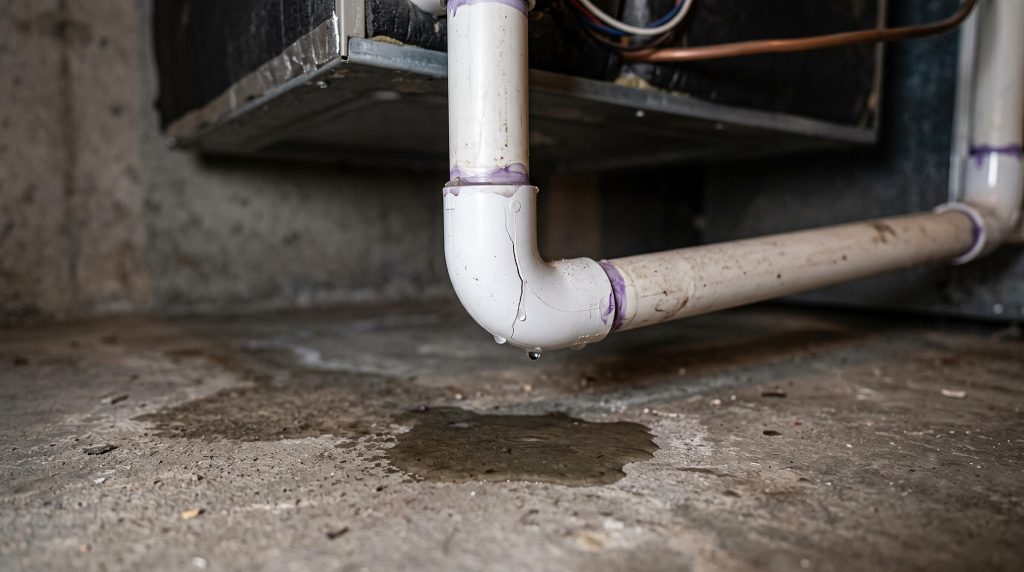
Common Reasons a Condensate Line Leaks or Backs Up
- Algae, dust or debris creates a blockage inside the drain line.
- The drain pan is damaged, rusted or overflowing.
- A drain connection becomes loose or disconnected.
- The line is cracked, damaged or improperly pitched.
- The primary drain backs up and the secondary drain cannot keep up.
- The AC system runs for long periods during humid conditions and exposes a drainage problem that was already developing.
Warning Signs to Watch For
- Water around the air handler or furnace closet.
- A new ceiling stain near the HVAC system or below attic equipment.
- Wet drywall, baseboards, insulation or flooring.
- Bubbling paint or soft drywall.
- A musty smell near the AC system or the rooms below it.
- The AC repeatedly shuts off because a float switch has been triggered.
- Water coming from an emergency or secondary drain location where you do not normally see it.
- If you discover active water, the priorities are to stop the source and limit additional damage.
- Avoid electrical equipment or outlets that have been exposed to water.
- Call an HVAC professional to correct the drain, pan or equipment problem.
- Photograph the affected areas before cleanup if there is significant damage.
- Remove standing water when it can be done safely.
- Have wet building materials checked if water has reached drywall, insulation, cabinets, flooring or other porous materials.
Fixing the AC Does Not Always Fix the Water Damage
The HVAC repair stops new water from entering the structure. It does not necessarily dry what is already wet.
Drywall, insulation, wood, cabinets and flooring can hold moisture after the condensate line has been cleared. Water can also travel away from the visible stain, especially inside wall and ceiling cavities. If those materials stay wet, the damage can spread and conditions may eventually support mold growth.
A restoration inspection is useful when the water has moved beyond a small, immediately cleaned surface spill or when you are not sure how far it traveled.
When Should Mold Testing Be Considered?
Not every condensate leak needs mold testing. If the leak was caught immediately and the affected materials were dried quickly, testing may not add useful information.
Testing may make more sense when the leak has been happening for an unknown period, there is visible growth or a persistent musty odor, materials stayed wet, or there is a specific reason to document whether mold is present.
Will Homeowners Insurance Cover AC Condensate Water Damage?
Coverage depends on the policy and the cause of the loss. A sudden water event may be treated differently from damage related to long-term leakage, maintenance or deterioration. Document the source and visible damage, and contact your insurance carrier if you are considering a claim.
ATH Restoration can help document the affected areas and the restoration work, but the insurance company ultimately determines coverage under the policy.
How ATH Restoration Handles AC-Related Water Damage
Once the HVAC source has been corrected, ATH Restoration can evaluate the affected building materials and determine what needs to be dried, removed or repaired. Depending on the loss, that may include moisture mapping, water extraction, drying equipment, selective removal of damaged materials, mold testing when appropriate, and reconstruction after the area is dry.
The advantage of handling the problem as a complete water loss is that the visible ceiling stain is not treated as the whole problem. The goal is to identify where the water actually traveled and return the affected area to a dry, stable condition.
Frequently Asked Questions:
Yes. If condensate escapes the drainage system and wets building materials, it can cause the same kinds of damage as other indoor water leaks. The severity depends on how much water escaped, where it traveled and how long materials stayed wet.
Drywall can absorb water quickly. Even a relatively small leak can create staining, swelling or soft areas if it continues long enough. The visible stain may also underestimate how much material is wet behind the surface.
Higher humidity means the air conditioner removes more moisture from the air. That creates more condensate for the drainage system to handle, which can expose a clogged or failing line that was not obvious during drier conditions.
If the AC system is actively causing the leak, an HVAC professional needs to stop the source. If water has already reached building materials, a restoration company can then determine how much of the structure is wet and what needs to be dried or repaired. Both may be needed.
Any moisture problem that keeps building materials damp can create conditions that support mold growth. The risk depends on how long the materials remain wet and the conditions in the affected area.
If an AC condensate problem has wet the ceiling, walls, insulation, cabinets or flooring, ATH Restoration can inspect the affected area and help determine what needs to happen next. Fix the HVAC source first, then make sure the building itself is actually dry.